052-5927592 17 Tzahal Street, Ness Ziona Sun-Thu 09:00-19:00, Fri 09:00-12:30

Notarial will

A notarial will is a "will made before an authority" under section 22 of the Succession Law, 5725-1965. The Law provides that, for the purposes of such a will, a notary has the same standing as a judge (section 22(g) of the Succession Law), and the will is prima facie evidence that the testator made it on the date and at the place stated in it (section 22(f) of the Succession Law).

Written by Amos Ilan, Advocate and NotaryPublished: Updated:

Amos Ilan, Advocate and Notary, drafts the will and certifies it, or certifies a text that you, or an advocate on your behalf, have prepared in advance.

Notarial Will in Israel: Three Things to Know in a 30-second video

Notarial Will in Israel: Three Things to Know

The video loads from YouTube only after you click. Go to the video page and transcript

A notarial will: three things to know. Hi, I'm Chotmi! Chotmi's mother makes a will. Three things: 1. No witnesses. The notary is like a judge. 2. The will is read before you, and you declare that it is your will. 3. You can ask the notary to deposit it with the Registrar of Inheritance. The testator meets the notary alone, without the heirs. A notary does not prepare a will for their own relative. Prima facie evidence of the date and place it was made. Thinking about a will? notaryon.biz

When is a notarial will advisable?

A notarial will is suitable when you want the will made before an official authority, when the distribution differs from the statutory order of succession or a dispute is anticipated, when the testator is elderly, and when the testator cannot read the language of the will and it must be read to him in translation.

  • When you want the will to be made before an official authority, with authoritative documentation of the date and place at which it was made.
  • When you wish to distribute the estate otherwise than in the order of succession laid down by law, or when a family dispute is anticipated.
  • When you wish to carry out tax planning and to balance the shares of the heirs with minimal future taxation.
  • When the testator is elderly, or when it matters to him that the will be read out and explained to him before he signs.
  • When the testator cannot read the language of the will: section 22(c) of the Succession Law requires the will to be read to him in a translation into a language he understands, with the translator confirming this on the face of the will.

The process

The process has four stages: an initial consultation, drafting the will or reviewing a text you brought, a signing meeting at which the testator attends in person and the notary certifies on the face of the will, and finally deposit with the Registrar of Inheritance if the testator so requests.

  1. Initial consultation

    We establish what you wish to bequeath, to whom, and whether there is an earlier will.

  2. Drafting

    The advocate drafts the will, or reviews the text you have brought.

  3. Signing meeting

    The will is read out to the testator, the testator declares that it is his will, and the notary certifies by his signature on the face of the will that this was done (section 22(b) of the Succession Law). The testator attends in person.

  4. Deposit

    The will may be deposited with the Registrar of Inheritance (section 22(e) of the Succession Law). In the case of a notarial will, if the testator so requests, the notary himself deposits the original will with the Registrar of Inheritance within 30 days of the date on which it was made, either in person at the Registrar's office or online through the Administrator General's website, at the testator's expense (regulation 23(a1) of the Notaries Regulations, 5737-1977).

What should you bring?

Bring a valid identity document, the names and identity numbers of the heirs, a list of the main assets and any earlier will. A person in hospital or confined to bed also brings a medical certificate in the form set out in the regulations, issued on the day of signing.

  • A valid identity document: an Israeli identity card or a passport.
  • The names and identity numbers of the heirs.
  • A list of the main assets (not mandatory, but helpful for the drafting).
  • Any earlier will.
  • A person in hospital or confined to bed: a medical certificate in the form set out in the First Schedule to the Notaries Regulations, 5737-1977, issued on the day of signing. In the certificate, the doctor confirms that the person is fully conscious, of sound mind and competent to perform an act before a notary (regulation 4(e) of the Regulations).

Timing and cost

The will is signed and certified at a single meeting and handed over as soon as it ends. The notary fee for certification is fixed by regulation: NIS 293 for the first signatory and NIS 147 for each additional signatory, plus VAT. Drafting the will is priced separately according to its complexity.

Timetable: an initial meeting can usually be arranged for the same day or the next. Drafting the will usually takes a few days, depending on its complexity. The will is signed and certified at a single meeting and handed to the testator as soon as it ends. If the testator asks for it to be deposited, the notary deposits it with the Registrar of Inheritance within 30 days of the date on which it was made (regulation 23(a1) of the Notaries Regulations).

Cost: the notary fee for certifying the will is fixed by regulation: NIS 293 for the first signatory and NIS 147 for each additional signatory. The amounts follow the 2026 tariff under the Notaries (Service Fees) Regulations, plus VAT. For an exact calculation for your service, see the notary fee calculator.

It is advisable to obtain several original copies, at NIS 88 plus VAT for each additional copy certified at the same time. The copies are best given to the heirs.

Drafting the will is separate legal work and is priced separately, according to its complexity.

If you cannot come to the office, you may request service at home, in hospital or in a care home. Under the regulations, a surcharge of NIS 645 for the first hour is then charged, plus travel expenses.

Will before witnesses, notarial will and mutual wills: advantages and disadvantages

A will before witnesses is flexible and carries no certification fee, but it depends on the witnesses, and formal defects are a common ground for objection. A notarial will is made before an authority, and a mutual will is not a separate form: it can be made before witnesses or before a notary.

Amos Ilan, Advocate and Notary, prepares all three types of will: a will before witnesses, a notarial will and mutual wills of spouses. The Succession Law, 5725-1965 recognises four forms of will (section 18 of the Succession Law): handwritten, before witnesses, before an authority and oral. A mutual will is not a separate form. It is a will that spouses make in reliance on each other (section 8A of the Succession Law), and it may be made either before witnesses or before a notary.

The choice therefore involves two questions: in which form to sign the will (before witnesses or before a notary), and whether the spouses wish to tie their wills to each other (mutual wills). The comparison below is based on the Succession Law and on rulings of the Supreme Court and the Family Courts.

Will before witnesses

Section 20 of the Succession Law

The will is made in writing, is dated, and is signed by the testator before two witnesses, after the testator has declared before them that it is his or her will. The witnesses confirm at the same sitting, by signing the will, that the testator so declared and signed. A minor or a person declared legally incompetent may not be a witness (section 24), and a provision in favour of a witness or the witness's spouse is void (section 35).

Advantages

  • No certification fee under the Notaries Regulations. You pay only the fee for drafting the will.
  • Flexibility: it can be signed anywhere two competent witnesses are present.
  • It can be deposited with the Registrar of Inheritance. A will deposited and kept until death is prima facie evidence that the testator made it, no later than the date of deposit (section 21 of the Succession Law).
  • A technical defect does not always invalidate it: if the basic elements are present (a written will that the testator brought before two witnesses) and there is no doubt that it reflects the testator's wishes, it can be upheld (section 25 of the Succession Law).

Disadvantages

  • It depends on the witnesses: both must be present together, at the same sitting, and sign immediately.
  • Formal defects, such as a missing date, a witness who was not present at the signing or a missing witness declaration, are a common ground for objection.
  • If an objection is filed, the witnesses may be required to testify, sometimes many years after the signing.
  • No official identifies the testator or records the signing.

Suits: a young and healthy testator, a simple distribution, and a family with no expected dispute.

Notarial will

Section 22 of the Succession Law (will before an authority)

The testator states the terms of the will orally, or submits them in writing, to a notary. The will is read to the testator, who declares that it is his or her will, and the notary confirms this by signing the will. For this purpose a notary has the same standing as a judge (section 22(g) of the Succession Law), and no witnesses are needed.

Advantages

  • It is prima facie evidence that the testator made it on the date and at the place stated in it (section 22(f) of the Succession Law).
  • A notarial certificate is sufficient evidence of what was said and done before the notary (section 19 of the Notaries Law, 5736-1976). According to case law, such a presumption is rebutted only by particularly persuasive evidence.
  • The notary identifies the testator, reads the will to him or her, and has it translated into a language the testator understands where necessary (section 22(c) of the Succession Law).
  • At the testator's request, the notary personally deposits the will with the Registrar of Inheritance within 30 days (regulation 23(a1) of the Notaries Regulations).
  • It makes objections based on forgery, formal defects or lack of understanding harder to sustain.

Disadvantages

  • In addition to the fee for drafting the will, a notary fee for certifying the will is payable, fixed by regulation: NIS 293 for the first signatory and NIS 147 for each additional signatory, plus VAT (notary fee calculator).
  • It requires a formal sitting before a notary. Service outside the office carries the surcharge set by the regulations.
  • It is not immune: the courts have set aside notarial wills too, where undue influence or serious defects in the procedure were proven.
  • A notary may not certify the will of a relative (section 10 of the Notaries Law).

Suits: an elderly or hospitalised testator, an unequal distribution among the children, a family with tensions, and a testator who does not read Hebrew.

Mutual wills

Section 8A of the Succession Law (added by Amendment No. 12 in 2005)

Spouses make wills in reliance on each other's will, either in two documents made at the same time or in a single document. Usually each spouse leaves everything to the other, and after both have died the property passes to the children. Mutual wills may be made before witnesses or before a notary.

Advantages

  • Security for the surviving spouse, especially in the family home.
  • Reliance: after one spouse dies, the other cannot freely change his or her will and pass the joint property to others, except under the conditions set by law.
  • They are an exception to the rule that a provision restricting the right to revoke a will is void (section 27(b) of the Succession Law), which makes them particularly suitable for second marriages and children from previous relationships.

Disadvantages

  • Rigidity while both spouses are alive: revocation only by written notice to the other spouse, and the notice revokes both wills (section 8A(b)(1)).
  • After one spouse dies: revocation only by renouncing the share in the estate or, if the estate has already been distributed, by returning everything received (section 8A(b)(2)).
  • A revocation that does not meet these conditions is invalid, even if a new will has been signed.
  • Imprecise drafting may lead to a result the spouses did not intend. See the case law below.

Suits: spouses with joint children, second marriages, and spouses who want to make sure the property ultimately reaches the children.

Comparison table: will before witnesses, notarial will and mutual wills

A will before witnesses is signed before two witnesses with no certification fee; a notarial will is signed before a notary for a fee of NIS 293 for the first signatory and NIS 147 for each additional signatory, plus VAT; and mutual wills are made in either of the two forms. All the forms are valid.

TopicWill before witnessesNotarial willMutual wills
Statutory provisionSection 20 of the Succession LawSection 22 of the Succession LawSection 8A of the Succession Law
Present at signingTwo competent witnesses, togetherA notary, without witnessesDepending on the form chosen: two witnesses or a notary
Fee for drafting the willSeparate, according to complexitySeparate, according to complexitySeparate, according to complexity
Certification fee under the Notaries RegulationsNoneNIS 293 for the first signatory, NIS 147 for each additional signatory, plus VATDepending on the form chosen: none before witnesses, the certification fee for a notarial will
Evidential weightOrdinary. If deposited, prima facie evidence that it was made no later than the date of depositPrima facie evidence of the date and place it was made, and the notarial certificate is evidence of what was done before the notaryDepending on the form chosen
Deposit with the RegistrarBy the testator personallyBy the testator, or by the notary at the testator's requestDepending on the form chosen
Technical defectMay be upheld if the basic elements are present and there is no doubt as to the testator's wishes (section 25)Likewise, if the will was stated or submitted to the notary by the testator personallyDepending on the form chosen
Amendment and revocationAt any timeAt any timeOnly under section 8A(b), unless the wills provide otherwise
Risk of objectionRelatively high, mainly on formal groundsRelatively low, but not zeroDepends on the form and on the clarity of the drafting
Particularly suitsA simple will, an agreed familyElderly testators, unequal distribution, families with tensionsSpouses, second marriages

Every form of will recognised by the Law is valid. The difference lies in how it is made, how it is documented, and the risk of an objection after death. For every type of will, the fee for drafting the will is separate. The notary fee set by the regulations covers only the certification of the will.

What does the case law say?

The case law holds that in the law of wills substance matters more than form, but it requires the basic elements. It examines undue influence by four auxiliary tests, voids a provision in favour of a beneficiary who took part in drafting, and examines the testator's capacity on the totality of the evidence.

The rulings below show how the courts examine each type of will, and what can be learned from them already at the drafting and signing stage.

  • Form serves the testator's wishes

    The Supreme Court held that in the law of wills, substance matters more than form. Section 25 of the Succession Law, which allows a will with a formal defect to be upheld, rests on this approach. But that section also requires the basic elements: in a will before witnesses, a written will that the testator brought before two witnesses. An amendment to the Law in 2023 (the Economic Plan Law for the 2023 and 2024 budget years) gave this power to the Registrar of Inheritance as well, and not only to the court.

    CA 869/75 Brill v. Attorney General, PD 32(1) 98
  • Undue influence: four auxiliary tests

    A provision of a will made as a result of undue influence is void (section 30 of the Succession Law). The Supreme Court, sitting in an expanded panel, set out auxiliary tests: the testator's dependence on the beneficiary, the testator's ties with others, the circumstances in which the will was made, and the beneficiary's involvement in making it. These tests apply to every type of will, including a notarial will. That is why, at the office, the testator meets the notary alone, without the heirs.

    FHCA 1516/95 Marom v. Attorney General (1998)
  • A beneficiary who takes part in drafting

    A provision in favour of a person who drew up the will, witnessed it or otherwise took part in drawing it up, or in favour of that person's spouse, is void (section 35 of the Succession Law). The Supreme Court held that the question is decided by a common-sense test, and that merely technical assistance does not invalidate the provision. Even so, a beneficiary who engages the advocate, conveys instructions or attends the signing puts the provision in his or her favour at risk. In a will before witnesses this is especially clear: a witness who is also an heir loses the inheritance.

    CA 99/86 Zeida v. Zeida (1986); FamA 6349/08 Anon. v. Anon. (2009)
  • Testamentary capacity is decided on all the evidence

    A will made when the testator could not understand the nature of a will is void (section 26 of the Succession Law). The Supreme Court held that a medical opinion is not decisive on its own, and the court decides on all the evidence, including the testimony of those present at the signing. So where the testator is elderly, a notary's documentation is of great value, and sometimes also an up-to-date medical opinion from the day of signing.

    CA 1212/91 LIBI Fund v. Binstock (1994)
  • A notarial document: a strong presumption, but rebuttable

    According to case law, the presumption of regularity of a notarial document may be rebutted only by particularly persuasive evidence. Even so, Family Courts have set aside notarial wills where undue influence and exploitation of the testator's condition, or serious defects in the way the will was made, were proven. A notary is not "insurance" against an objection. The notary reduces the risk, provided that the procedure is carried out properly.

    CA 4175/12 Even VeSid Industry Ltd. v. Gadir (10.3.2014); Probate (Family) 40917-10-17 (2020); Probate (Family) 51414-06-16 (2021)
  • Mutual wills: a revocation outside the Law is invalid

    The Supreme Court reiterated that a mutual will can be revoked only in the ways set out in section 8A(b): while both spouses are alive, by written notice to the other spouse; after one of them dies, by renunciation or restitution. A revocation that does not meet these conditions is invalid, so a later will made by the surviving spouse will not prevail over the mutual will.

    FamA 10090/17 Anon. v. Anon. (2018)
  • The wording decides whether the wills are "mutual"

    Spouses may set rules in their wills other than those in the Law (section 8A(c)). The Tel Aviv District Court held that where the wills state expressly that each spouse may amend or revoke his or her will at any time, they are not mutual wills within the meaning of section 8A, and it upheld the later will. Whether the wills are "locked" therefore depends on the wording, not on the title.

    Family Appeal (Tel Aviv District) 66346-12-23 (2024)
  • Renouncing a mutual will: why a substitute heir clause matters

    Spouses provided in mutual wills that each would inherit from the other, and that after both of them the children would receive the property in unequal shares. After the mother died, the father renounced his share in order to change his own will. The Supreme Court held that the provision in favour of the children was drafted as a successive heir provision (section 42 of the Succession Law), which applies only if the first heir actually inherits. Since he renounced, the mother's estate was divided according to the Law and not according to the shares in the will. A request for a further hearing was dismissed, and the President of the Supreme Court noted that the way to avoid such a result is to add a substitute heir provision to the wills (section 41 of the Succession Law).

    FamA 130/24 Anon. v. Anon. (26.11.2024); FHCA 65554-01-25 Anon. v. Anon. (20.2.2025)
  • Mutual wills made before 2005

    Section 8A applies to mutual wills made after Amendment No. 12 came into force. In older mutual wills, the Supreme Court gave effect to a restriction that the spouses had included in the wills on transferring the assets the first heir received. Anyone holding an older mutual will should check exactly what it says.

    FamA 1857/24 Anon. v. Anon. (2.12.2024)

Important: this overview is general and is not legal advice. Each will is examined according to its wording and the circumstances in which it was made.

How do you choose the type of will?

Choose according to a few questions: how unusual the distribution is, the testator's age and medical condition, whether you are spouses who want to provide for each other, whether there are children from previous marriages, and whether the testator reads Hebrew.

  • Does the distribution differ from the statutory one, or is it unequal among the children? The more unusual the distribution, the greater the chance of an objection, and a notarial will is preferable.
  • What are the testator's age and medical condition? For an elderly or ill testator, the notary's documentation, and for a hospitalised testator the doctor's certificate required by the regulations, narrow the scope for claims of incapacity.
  • Are you spouses who want to provide for each other first, and then for the children? Mutual wills, before witnesses or before a notary, with clear provisions on amendment, revocation, successive heirs and substitute heirs.
  • Are there children from previous relationships? Consider mutual wills with express restrictions, so that the property does not later pass to someone you did not intend.
  • Does the testator read Hebrew? If not, a notarial will allows the will to be read in translation into a language the testator understands, with confirmation on the will itself.

At the first meeting we will choose the appropriate form together. Amos Ilan drafts the will and either certifies it as a notary or conducts the signing before witnesses. To arrange a meeting.

What happens when there is no will?

When there is no will, the estate is divided according to the order of succession in the Succession Law: the spouse, the children, and in their absence the parents and siblings. The spouse also receives the movable property of the shared household and, alongside the children, half of the rest of the estate.

When a person dies without a will, the estate is divided according to the order of succession set out in the Succession Law: the spouse, the children, and in their absence the parents and siblings. The spouse also receives the movable property of the shared household, including the car, and, alongside the children, half of the rest of the estate.

The statutory division is a default, and it does not always suit the family. Some situations in which it can come as a surprise:

  • Children from a previous marriage, when you want your current spouse to stay in the home.
  • Cohabiting partners, whose entitlement is recognised but must be proved, and is sometimes disputed.
  • A child who needs special protection, or a child who already received substantial help during the parents' lifetime.
  • A family business or an apartment that you want to pass to one heir rather than be split among everyone.

A will lets you decide all of this in advance and spares your family a dispute at a difficult time.

What can a will provide?

A will can set the division of assets, successive heirs, an executor, who will be the guardian of minor children, and special conditions. Money in a provident fund, a pension fund or life insurance with a named beneficiary is usually paid to the beneficiary and not under the will.

  • Division of assets: who receives the apartment, the savings and the rest of the property, and in what shares.
  • Successive heirs: for example, the apartment passes to the spouse for life and then to the children. The law allows such an arrangement, and it must be drafted with care.
  • Executor: a person whose role is to administer the estate and distribute it according to the will.
  • Provisions for minor children: a parent can state in the will who should be the guardian of the children if there is no other parent to raise them.
  • Conditions and special instructions: for example, that an inheritance is paid to a child on reaching a certain age, or that an apartment is not sold for a period of time.

What is not part of the estate: money in a provident fund, a pension fund or a life insurance policy for which a beneficiary has been named is usually paid to the beneficiary and not according to the will. It is therefore worth checking the beneficiary forms as well, so that they match the will.

Mutual wills, amendment and revocation

The Succession Law restricts the revocation of mutual wills of spouses (section 8A), so decide in advance what the surviving spouse may do with the property. An ordinary will can be amended or revoked at any time, and the later will prevails to the extent that it contradicts the earlier one.

Mutual wills of spouses: many couples make wills in which each leaves everything to the other, and after both of them the property passes to the children. The Succession Law restricts the possibility of revoking such wills (section 8A of the Succession Law), so it is important to decide in advance, and to state in the wills, what the surviving spouse may do with the property. The full explanation, advantages, disadvantages and case law: mutual wills.

Amendment and revocation: a testator may amend or revoke a will at any time, for example by making a new will. Where there are several wills, the later will prevails to the extent that it contradicts the earlier one. A new will therefore states expressly whether it revokes all previous wills. A will deposited with the Registrar of Inheritance can also be withdrawn from deposit.

When to update: after marriage or divorce, the birth of a child or grandchild, the purchase or sale of an apartment, or the death of one of the heirs.

Mistakes that lead to disputes after death

The common mistakes are a beneficiary involved in drafting, heirs in the room at signing, doubts about the testator's capacity without a recent medical opinion, and vague wording. A well-drafted will made before a notary makes an objection harder, but does not prevent it.

  • A beneficiary involved in drafting: under the Succession Law, a provision that benefits the person who drew up the will, witnessed it or took part in drafting it, or that person's spouse, is void. The notary who certifies the will, and the notary's spouse, therefore cannot benefit from it.
  • Heirs in the room at signing: the presence of someone who benefits from the will may lead to a claim of undue influence. It is advisable for the testator to be alone with the notary when signing.
  • Doubts about capacity: when the testator is elderly or ill, it is worth attaching a recent medical opinion on their cognitive state, even where the law does not require it.
  • Vague wording: "the apartment will be divided among the children", without saying what happens if one of them dies before the parent, or if one wants to live there. Precise drafting prevents most disputes.

After death: the heirs apply to the Registrar of Inheritance for a probate order and attach the original will. If an objection is filed, the case is transferred to the Family Court. A well-drafted will made before a notary makes such an objection harder, but does not prevent it.

Frequently asked questions

What is the difference between a will before witnesses and a notarial will?

In a will before witnesses, the testator signs before two witnesses, who confirm this by signing the will (section 20 of the Succession Law). In a notarial will, the notary takes the place of the witnesses, and the will is prima facie evidence that the testator made it on the date and at the place stated in it (section 22 of the Succession Law). With a notarial will, in addition to the fee for drafting the will, a notary fee for the certification, fixed by regulation, is payable, and in return it reduces the risk of an objection.

What are mutual wills?

Wills that spouses make in reliance on each other's will, in a single document or in two documents made at the same time (section 8A of the Succession Law). They may be made before witnesses or before a notary.

Can mutual wills be revoked?

Yes, but only under the conditions set by law. While both spouses are alive: by written notice to the other spouse, which revokes both wills. After one of them dies: by renouncing the share in the estate, or by returning what was received if the estate has already been distributed. The spouses may provide otherwise in the wills, but a provision that entirely excludes revocation while both are alive is void (section 8A(c) of the Succession Law).

Who can witness a will?

Any adult who has not been declared legally incompetent (section 24 of the Succession Law). A provision of a will in favour of a witness, or of the witness's spouse, is void (section 35 of the Succession Law). The witnesses should therefore be people who do not benefit from the will.

Is a notarial will "stronger" than an ordinary will?

Every form of will recognised by the Law is valid. The advantage of a will made before an authority is that it is made before an authorised official, and that it is prima facie evidence that the testator made it on the date and at the place stated in it. It does not prevent an objection to the will from being filed.

Can the notary also draft the will?

Yes. Amos Ilan is also an advocate, so the will can be drafted at the office and certified there, or you can bring a ready-made text for certification only.

Are witnesses needed?

No. In a will made before an authority, the notary takes the place of the two witnesses.

Where is the will kept?

It can be deposited with the Registrar of Inheritance under section 22(e) of the Succession Law, or original copies can be given to the heirs.

Can a notary certify the will of a relative?

No. Under section 10 of the Notaries Law, a notary may not exercise his powers in a matter concerning a relative, such as a spouse, parent, descendant, brother or sister.

Can the will be signed at home or in hospital?

Yes. If you cannot come to the office, you may request service at home, in hospital or in a care home. Under the regulations, a surcharge of NIS 645 for the first hour is then charged, plus travel expenses. If the testator is hospitalised or confined to bed, the notary may certify the will only if he is shown a medical certificate, in the form set out in the First Schedule to the Notaries Regulations, issued on the day of signing. In the certificate the physician confirms that the testator is fully conscious, of sound mind and competent to perform an act before a notary (regulation 4(e) of the Notaries Regulations, 5737-1977).

Can a will be drawn up in English?

Yes. For a person who does not read Hebrew the will can be drawn up in English, or drawn up in Hebrew with a notarized translation into English attached. It is important that the testator understands every word of the will he or she signs.


Contact us

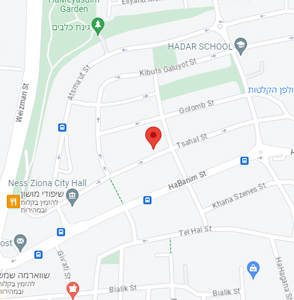
The office is at 17 Tzahal Street, Ness Ziona, in an area with easy access and parking on site. Notarial services are provided at the office, outside the office, or remotely where the law allows.

  • Phone and WhatsApp052-5927592
  • Address17 Tzahal Street, Ness Ziona, parking nearby
  • Opening hoursSun-Thu 09:00-19:00, Fri 09:00-12:30

How do you get here?

17 Tzahal Street, Ness Ziona. Parking near the office, with service on the ground floor. The office is a short drive from Rehovot, Rishon LeZion and Yavne.

Get directions in Google Maps

Not sure which certificate you need? Let's start with a conversation

Tell us which authority the document is intended for and for what purpose, and we will tell you exactly which notarial certificate you need, whether an apostille is required and in what order, and how much it will cost under the regulations.

Call WhatsApp Calculator